 CHARLOTTE RETAINING WALLS
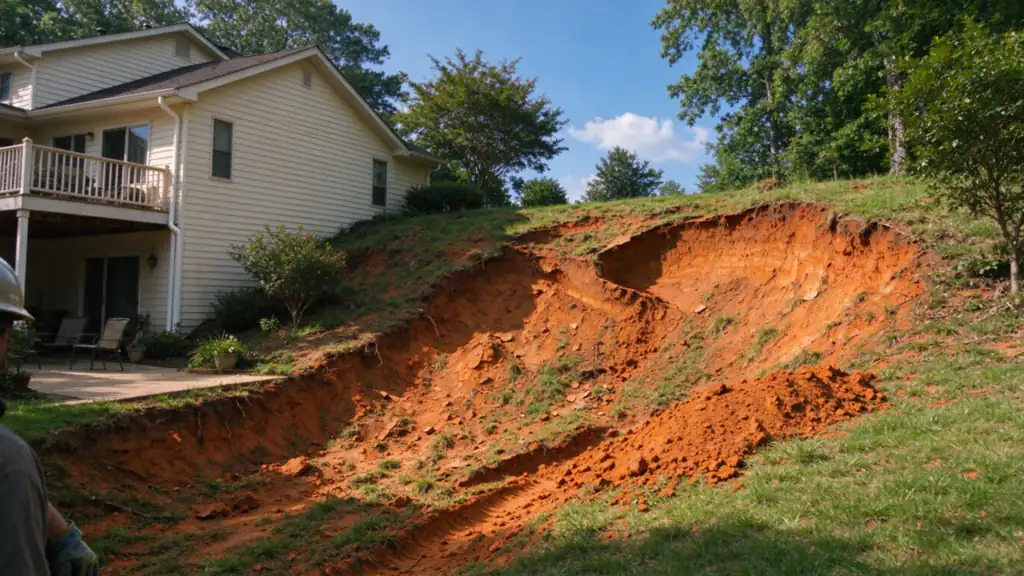
Cairn Charlotte Retaining Walls offers slope repair associated with retaining-wall and grade-change projects in Charlotte, with work performed by fully licensed and insured contractors. The scope can include erosion repair, drainage changes and reconstruction of damaged sloping ground where appropriate. Possible deeper instability needs suitable geotechnical investigation and design; a general slope-repair inquiry is not a promise to perform every form of landslide stabilization.
Separate surface erosion from displaced ground
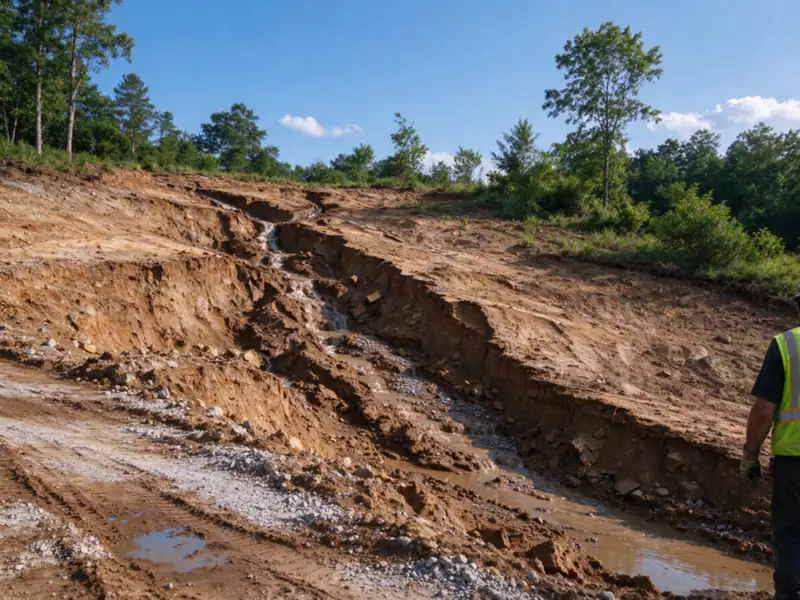
Surface runoff can cut small channels, expose roots and carry loose soil to the bottom of a slope. The useful investigation follows where that water comes from and why the surface is vulnerable. Replacing lost soil without changing concentrated runoff can repeat the same damage.
A slump may involve a moving mass rather than only the surface. A curved break at the top, bulging ground below or displacement crossing several improvements deserves a different level of attention. Photographs cannot establish its depth or confirm stable ground beneath it. Where movement may be wider or deeper, obtain the appropriate professional evaluation before treating a wall at the toe as the answer.
Our hillside-wall service distinguishes a retaining structure from the surrounding slope. A wall can be part of a designed repair, but it does not automatically resolve ground movement beyond its foundation.
Find the water feeding the damage
Look at roof drainage, irrigation, pavement runoff and water arriving from higher ground. Identify where it enters the affected area and what route it takes during rain. A wet patch and a washed-out channel may share a source without needing the same surface repair.
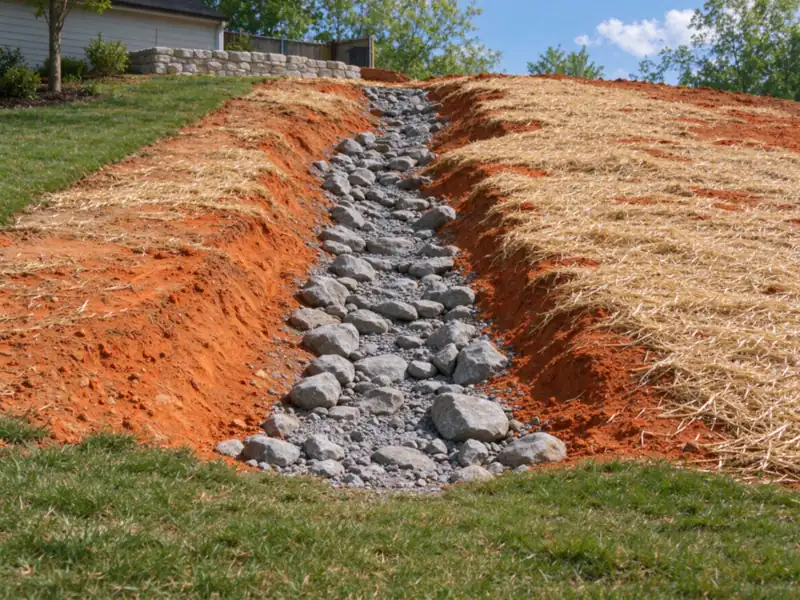
Drainage changes need an appropriate discharge route. Sending concentrated flow to a lower neighbor, a public path or another unprotected part of the slope merely moves the problem. The outlet guide explains why collection and discharge belong together. Where a wall is involved, wall drainage remains a defined part of the system rather than a substitute for broader runoff planning.
Repair choices depend on the finding
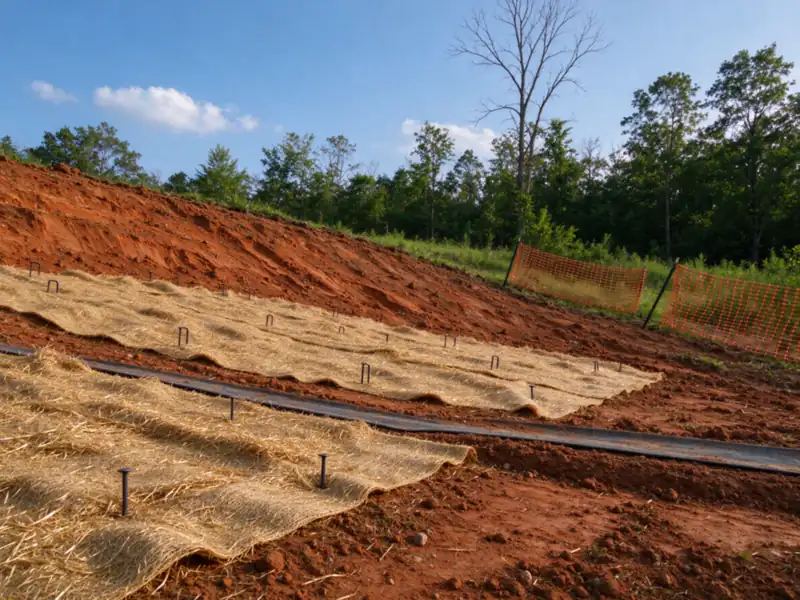
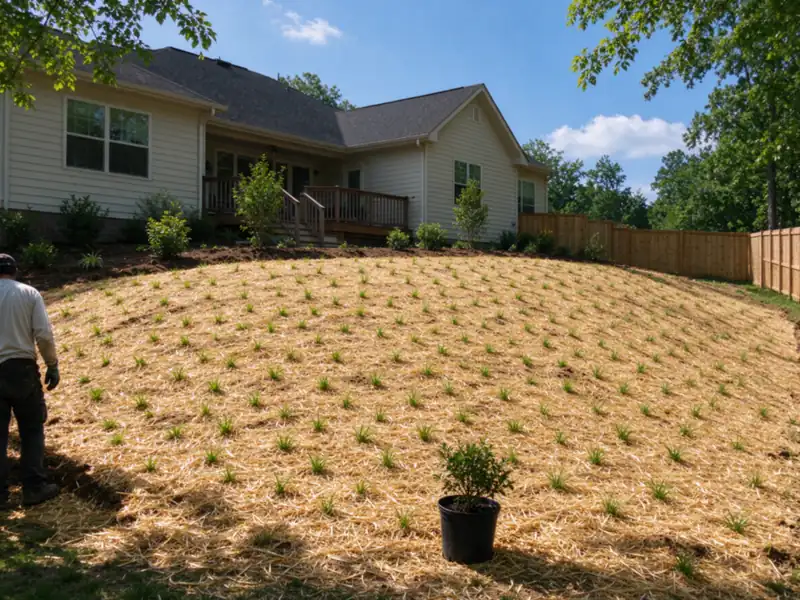
A surface-erosion scope may include reshaping damaged ground, controlling runoff and protecting exposed soil while planting establishes. A shallow reconstruction can involve removing unsuitable material, preparing suitable underlying ground and placing specified fill with the required compaction and drainage.
Those descriptions are categories, not instructions for every property. The method depends on the ground, intended use and any design requirements. Wet soil mixed with roots and debris is not automatically suitable material to put back. Reuse, import and disposal should be stated in the proposal.
Where there is room, laying the slope back may be more useful than adding a retaining structure. Where space or the desired finished grade prevents that, a wall may enter the comparison. Our wall-versus-grading guide connects the alternatives without assuming either fits every yard.
Charlotte creek buffers and floodplains need an early check
A slope near water can have constraints unrelated to the owner's preferred finish. Charlotte-Mecklenburg uses several stream and lake buffer regimes. The applicable buffer depends on the water body and jurisdiction, and disturbance should be checked before proposing clearing, fill or a permanent wall.
Screen both FEMA and Community Floodplain mapping. Grading and filling can require floodplain authorization even when the proposed work is not a building. Charlotte's floodplain guidance and buffer information provide the starting points for those reviews.
Do not describe creek-bank work as ordinary garden grading without establishing its actual limits. A proposed erosion repair may need a different review or specialist design. The scope should identify that uncertainty before equipment access is planned.
Access can disturb more ground than the repair
Show the route from the street to the damaged area, including gates, stairs, soft ground and nearby structures. Material delivery and soil removal need a workable route and staging area. The cost of handling can be substantial even when the affected patch looks small.
Tree roots and protected trees need attention before excavation or access is set. Temporary stockpiles can affect retained ground and drainage, so they should not be placed merely where a yard looks empty. The excavation guide helps describe the full disturbance boundary, not just the final repair outline.
Agree the repair limits and price basis
A useful slope proposal states the observed problem, the investigation or design still needed, the ground being removed or placed, water-management work and the finished surface. Include compaction, testing where specified, erosion protection and restoration in the comparison.
There is no reliable universal slope-repair rate for an unseen site. A small runoff channel and a reconstruction involving significant soil handling do not share the same scope. The wall cost guide applies to wall installation context; it should not be stretched into a price for all slope work. Request an estimate using the actual condition and intended outcome.
Questions about slope repair
Will adding soil fix an eroded slope?
Only if the cause and the suitability of the repair are addressed. Concentrated runoff can remove new soil just as it removed the old surface. Fill placement also needs a suitable ground condition and an appropriate finished drainage route.
Is a slump the same as surface erosion?
No. Erosion removes material from the surface, while a slump involves displacement of ground. The visible signs can overlap. Their depth and mechanism should not be assumed from a photograph or the size of the bare patch.
Can a retaining wall stabilize the entire hillside?
Not automatically. A wall may be part of an engineered solution, but movement can extend beneath or beyond it. Possible deeper instability needs suitable investigation and design before construction options are selected.
Can you reuse the soil already on the site?
That depends on its composition, moisture and the requirements of the work. Material containing roots, debris or unsuitable wet soil may need removal or treatment. The proposal should identify reuse assumptions and import allowances.
Do slope repairs need permits?
The location, disturbance and work determine the requirements. Grading, floodplain, buffer and other reviews may apply separately from a wall permit. Check the permit guide and confirm the actual parcel requirements.
Can you repair erosion beside a creek?
The inquiry first needs buffer, floodplain and scope review. Work near a watercourse should not be assumed to be ordinary private-yard grading. Additional authorization or specialist input may change the appropriate approach.
Will planting alone stop soil movement?
Planting can help protect a suitable finished surface, but it does not establish stability where ground is already moving. Address the water source and underlying condition before treating vegetation as a structural repair.
What if the water comes from another property?
Document the observed route and identify ownership, easements and the available discharge options. Do not assume a contractor can change another parcel's drainage without permission. Responsibility and physical repair are related but separate questions.
How much ground will construction disturb?
Potentially more than the visible damaged area. Access, excavation, soil handling and drainage routes can extend the footprint. Ask for a defined disturbance and restoration boundary before comparing a slope-repair price.
What should I photograph?
Take safe views of the whole slope, water entry points, the toe and nearby structures. Include the access route and what changed over time. Do not step onto unstable ground or an exposed edge to collect better evidence.
What this work looks like